Sản lượng sản xuất tăng kéo theo áp lực lớn lên hoạt động kiểm tra chất lượng. Tại các nhà máy có dây chuyền tốc độ cao, nhân công kiểm tra sản phẩm thường phải tăng theo công suất, trong khi tuyển dụng, đào tạo và duy trì nhân sự QC ngày càng tạo thêm áp lực về chi phí vận hành. Bài toán càng rõ ở các ngành điện tử, ô tô, cơ khí chính xác và sản xuất hàng tiêu dùng, nơi yêu cầu kiểm tra ngoại quan liên tục và tỷ lệ lỗi cần được kiểm soát chặt chẽ.
Khi sản lượng tiếp tục mở rộng, việc bổ sung nhân sự không phải lúc nào cũng giúp duy trì hiệu suất kiểm tra. Mỏi mắt, suy giảm tập trung, khác biệt giữa các kiểm tra viên và giới hạn về thời gian quan sát có thể ảnh hưởng đến khả năng phát hiện lỗi. Giảm nhân công kiểm tra sản phẩm vì thế đang trở thành một hướng tối ưu nguồn lực, đặc biệt khi doanh nghiệp cần tăng công suất mà vẫn duy trì tiêu chuẩn chất lượng.
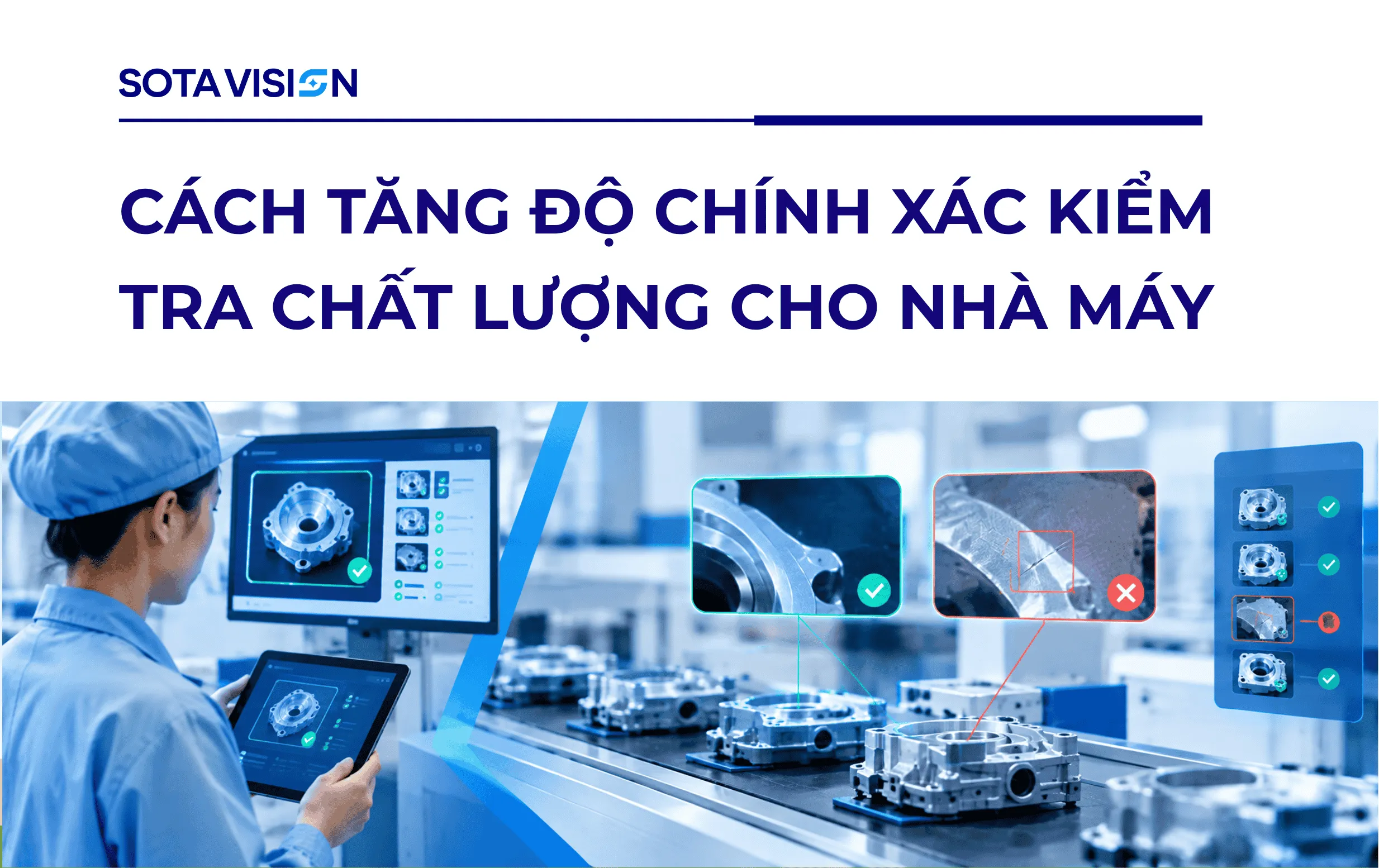
AI Vision cho phép tự động hóa nhiều công đoạn kiểm tra ngoại quan, hỗ trợ kiểm tra liên tục theo tốc độ dây chuyền và giảm khối lượng công việc kiểm tra thủ công. Bài viết phân tích chi phí nhân công kiểm tra sản phẩm, giới hạn của mô hình kiểm tra thủ công và các phương án tự động hóa có thể áp dụng khi nhà máy mở rộng sản lượng.
Nhân Công Kiểm Tra Sản Phẩm Tăng Theo Sản Lượng: Vì Sao Bài Toán Chi Phí Khó Kiểm Soát Khi Nhà Máy Mở Rộng
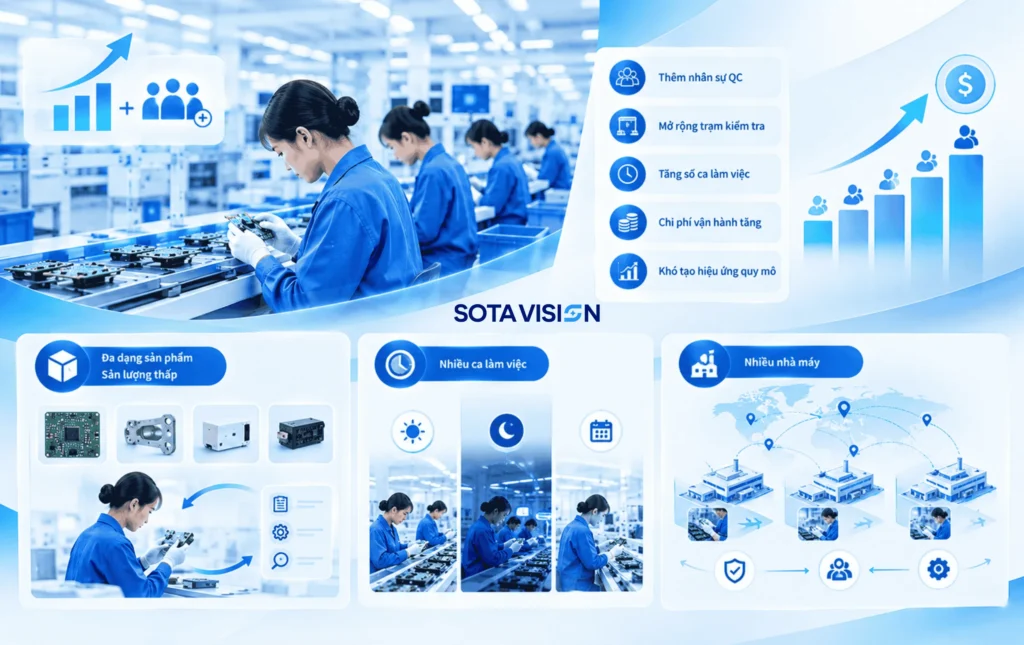
Mở rộng thêm dây chuyền đồng nghĩa với tăng khối lượng sản phẩm cần kiểm tra. Nếu mỗi dây chuyền cần bổ sung nhân công kiểm tra sản phẩm, mô hình nhân sự sẽ nhanh chóng trở nên cồng kềnh khi nhà máy chuyển sang quy mô sản xuất lớn hơn.
Mô Hình Phân Bổ Nhân Sự Kiểm Tra Theo Sản Lượng Và Công Suất Dây Chuyền
Ở mô hình kiểm tra thủ công, mô hình phân bổ nhân công kiểm tra sản phẩm theo sản lượng và công suất dây chuyền thường được xác định dựa trên khối lượng sản phẩm cần kiểm tra và năng suất của từng kiểm tra viên. Công thức cơ bản có thể biểu diễn như sau:
- Số kiểm tra viên mỗi ca = Sản lượng mỗi giờ ÷ Năng suất kiểm tra của một người mỗi giờ
Ví dụ giả định: Dây chuyền chạy 30 sản phẩm/phút, tương đương 1.800 sản phẩm/giờ. Nếu mỗi kiểm tra viên có thể xử lý 10 sản phẩm/phút, tương đương 600 sản phẩm/giờ, nhà máy cần 3 người/ca. Khi sản lượng tăng gấp đôi lên 3.600 sản phẩm/giờ, nhu cầu nhân sự cũng tăng lên 6 người/ca nếu các điều kiện kiểm tra không thay đổi.
Ba yếu tố có thể làm nhu cầu nhân công kiểm tra sản phẩm tăng cao hơn:
- Tốc độ dây chuyền: Công suất càng lớn, số lượng sản phẩm cần kiểm tra trong mỗi giờ càng tăng.
- Độ phức tạp sản phẩm: Nhiều bề mặt, nhiều vị trí cần kiểm tra hoặc nhiều nhóm lỗi cần phân biệt sẽ làm tăng thời gian kiểm tra trên từng sản phẩm.
- Tiêu chuẩn chất lượng: Yêu cầu kiểm tra 100%, truy xuất từng sản phẩm hoặc kiểm soát nhiều tiêu chí chất lượng sẽ làm tăng khối lượng công việc của kiểm tra viên.
Điểm cần lưu ý là mô hình phân bổ nhân công kiểm tra sản phẩm theo sản lượng và công suất dây chuyền có giới hạn về khả năng mở rộng. Mỗi sản phẩm vẫn cần một khoảng thời gian quan sát và đánh giá của con người. Vì vậy, khi sản lượng tăng, nhân công kiểm tra sản phẩm có xu hướng tăng tương ứng nếu doanh nghiệp vẫn duy trì phương pháp kiểm tra thủ công.
Chi Phí Ẩn Ngoài Lương: Tuyển Dụng, Đào Tạo, Làm Thêm Giờ, Nghỉ Việc
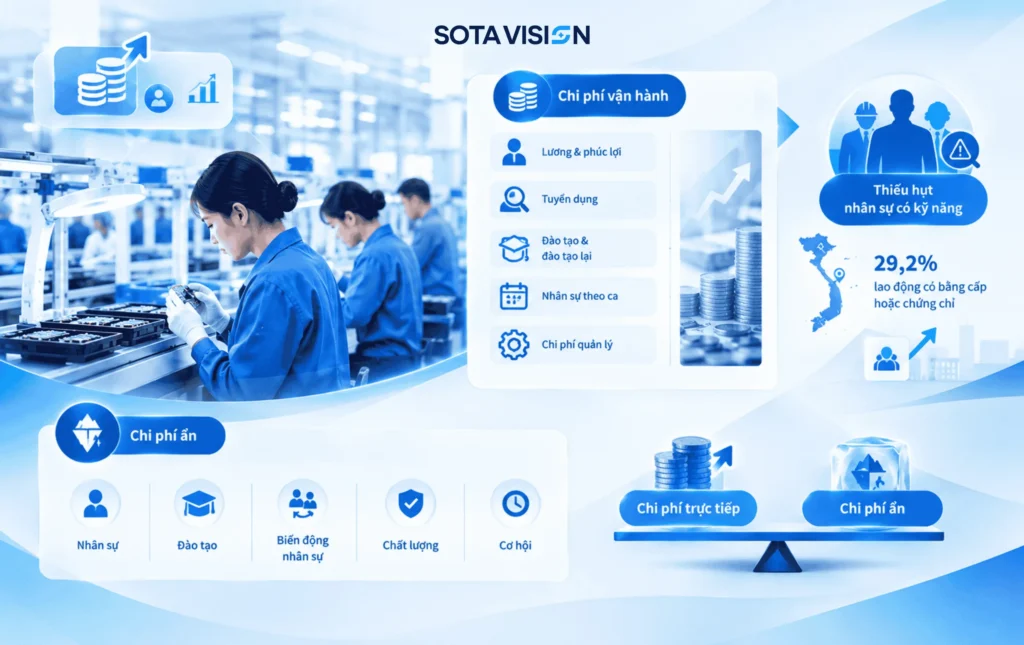
Chi phí nhân công kiểm tra sản phẩm không chỉ nằm ở tiền lương hàng tháng. Khi tính đúng chi phí cho nhân công kiểm tra sản phẩm, doanh nghiệp cần đưa thêm bảo hiểm, kinh phí công đoàn, tuyển dụng, đào tạo, làm thêm giờ và chi phí thay thế nhân sự vào ngân sách QC.
| Hạng mục | Vì sao thường bị bỏ sót | Dữ liệu tham chiếu |
| Lương cơ bản | Thường chỉ tính mức lương hiện tại của nhân công kiểm tra sản phẩm | Lương tối thiểu vùng I từ 01/01/2026 là 5.310.000 đồng/tháng theo Nghị định 293/2025/NĐ-CP. Thu nhập bình quân lao động làm công hưởng lương 6 tháng đầu 2026 đạt 10,0 triệu đồng/tháng, tăng 7,3% so với cùng kỳ. |
| Bảo hiểm bắt buộc | Không thể hiện trong khoản lương thực nhận của nhân công kiểm tra sản phẩm | Doanh nghiệp đóng thêm 21,5% quỹ lương làm căn cứ đóng theo các khoản bảo hiểm bắt buộc áp dụng. |
| Kinh phí công đoàn | Thường được hạch toán thành khoản chi phí riêng | Mức đóng là 2% quỹ tiền lương làm căn cứ đóng BHXH đối với đối tượng thuộc diện đóng. |
| Tuyển dụng và đào tạo | Chi phí phân bổ ở nhiều bộ phận nên khó quy trực tiếp cho nhân công kiểm tra sản phẩm | Nghiên cứu được Talentnet dẫn lại ước tính chi phí thay thế một nhân sự nghỉ việc ở mức 50–60% lương năm. Đây là số liệu chung, không riêng vị trí kiểm tra sản phẩm. |
| Làm thêm giờ | Phát sinh khi sản lượng hoặc đơn hàng tăng cao | Chi phí phụ thuộc vào lịch sản xuất, số giờ tăng ca và chính sách tiền lương của từng nhà máy. |
| Nghỉ việc và thay thế nhân sự | Mỗi trường hợp nghỉ việc tạo thêm nhu cầu tuyển dụng, đào tạo và bố trí người thay thế | Có thể tham chiếu nhóm chi phí tuyển dụng và đào tạo để ước tính tác động. |
Khi tính đầy đủ các khoản trên, chi phí nhân công kiểm tra sản phẩm thực tế sẽ cao hơn đáng kể so với con số thể hiện trên bảng lương. Đặc biệt, khi sản lượng tăng và số lượng nhân công kiểm tra sản phẩm phải mở rộng theo, tổng chi phí QC cũng tăng tương ứng.
Khó Tuyển Và Khó Giữ Nhân Công Kiểm Tra Tại Các Khu Công Nghiệp Việt Nam
Nguồn nhân công kiểm tra sản phẩm phụ thuộc vào cùng một bể lao động phổ thông mà mọi nhà máy đang cạnh tranh:
- Bắc Ninh: quý I/2026, doanh nghiệp có nhu cầu tuyển khoảng 60.000 lao động. Lao động phổ thông ngành điện, điện tử, tin học chiếm trên 92%.
- Hải Phòng: 340 doanh nghiệp trong các khu công nghiệp cần tuyển hơn 33.000 lao động.
- TP.HCM: hơn 313.000 vị trí tuyển dụng, trong khi chưa đến 192.000 người tìm việc.
- Toàn cầu: 72% nhà tuyển dụng ngành sản xuất báo cáo khó lấp đầy vị trí trống.
Công việc soi lỗi lại đòi hỏi tập trung cao. Nghiên cứu của Sandia National Laboratories ghi nhận kiểm tra thị giác là công việc nặng, chủ yếu về nhu cầu trí óc và nỗ lực. Nhà máy vì thế vừa khó tuyển, vừa khó giữ nhân công kiểm tra sản phẩm đủ lâu để họ đạt độ ổn định cần thiết.
Các Dấu Hiệu Cho Thấy Mô Hình Kiểm Tra Thủ Công Đang Giới Hạn Công Suất
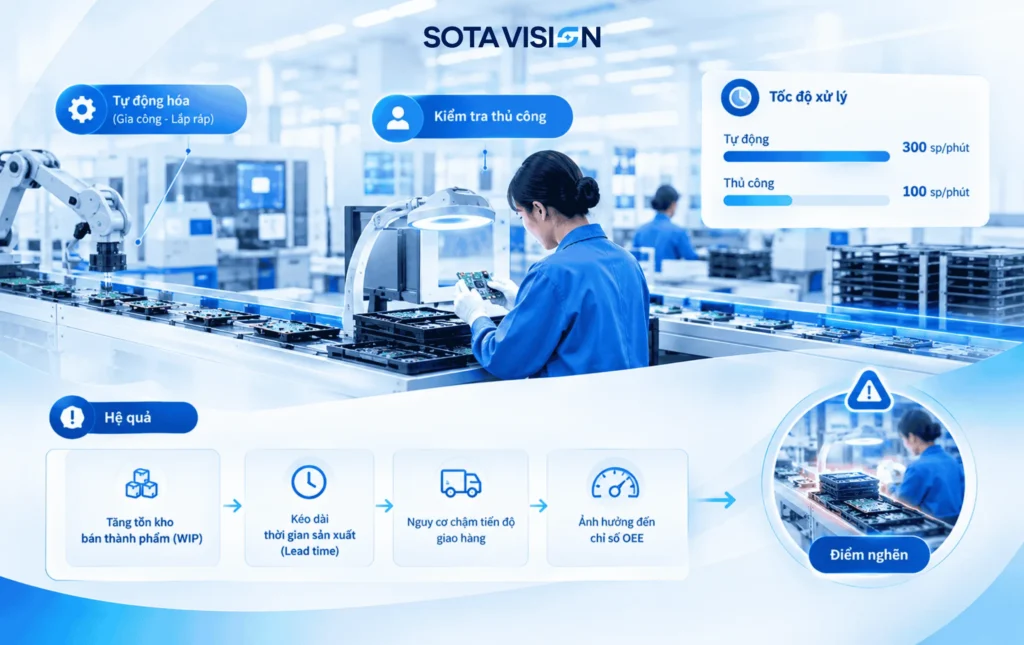
Nếu nhân công kiểm tra sản phẩm đang trở thành yếu tố giới hạn tốc độ xử lý tại dây chuyền, nhà máy có thể xuất hiện một số dấu hiệu rõ rệt. Những tín hiệu này cho thấy năng lực kiểm tra chưa theo kịp sản lượng và có thể ảnh hưởng trực tiếp đến tiến độ sản xuất, giao hàng và kiểm soát chất lượng.
- Tồn hàng chờ kiểm: Bán thành phẩm hoặc thành phẩm phải chờ trước trạm QC do năng lực của nhân công kiểm tra sản phẩm không đáp ứng kịp tốc độ đầu ra.
- Tăng ca QC liên tục: Nhân sự kiểm tra thường xuyên làm thêm giờ để xử lý khối lượng sản phẩm phát sinh trong ca chính.
- Tỷ lệ khiếu nại tăng: Lỗi lọt qua công đoạn kiểm tra có xu hướng gia tăng khi khối lượng kiểm tra vượt quá năng lực xử lý của đội ngũ.
- Nhân sự QC biến động cao: Nhà máy phải liên tục tuyển dụng và đào tạo nhân công kiểm tra sản phẩm mới để bù đắp nhân sự nghỉ việc.
- Điều chỉnh tiêu chuẩn kiểm tra để đáp ứng tiến độ: Một số bước hoặc tiêu chí kiểm tra bị rút gọn nhằm tránh tồn đọng sản phẩm, tạo thêm rủi ro về chất lượng.
Khi nhiều dấu hiệu xuất hiện cùng lúc, năng lực kiểm tra thủ công có thể đã trở thành giới hạn đối với công suất tổng thể của dây chuyền, đặt ra nhu cầu đánh giá lại phương pháp kiểm tra và cách phân bổ nguồn lực QC.
Xem thêm: Vì Sao Kiểm Tra Thủ Công Khó Mở Rộng Theo Quy Mô Sản Xuất
Giới Hạn Của Nhân Công Kiểm Tra Sản Phẩm Khi Tốc Độ Sản Xuất Tăng
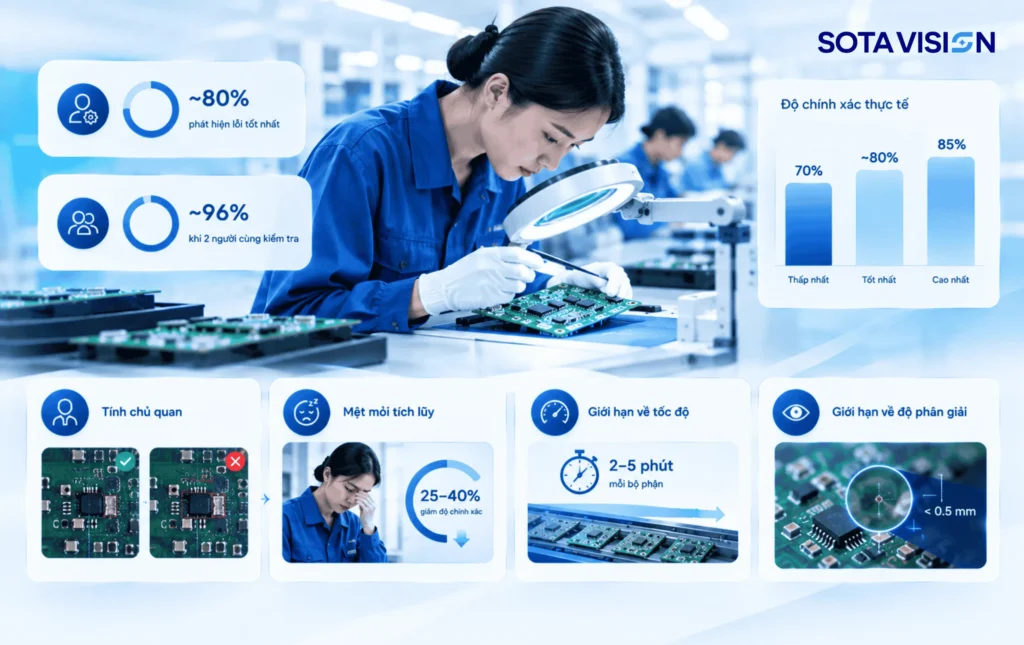
Bổ sung nhân công kiểm tra sản phẩm có thể tăng năng lực kiểm tra trong ngắn hạn, nhưng không loại bỏ giới hạn sinh lý của kiểm tra bằng mắt. Khả năng duy trì sự tập trung có thể suy giảm theo thời gian, đặc biệt trong các công việc quan sát lặp lại với cường độ cao.
Giới hạn của nhân công kiểm tra sản phẩm không đơn thuần nằm ở tay nghề hay mức độ tuân thủ quy trình. Đặc điểm sinh lý của thị giác và khả năng duy trì cảnh giác cũng ảnh hưởng đến tính ổn định của kết quả kiểm tra. Đây là vấn đề cần được xem xét khi doanh nghiệp tăng công suất nhưng vẫn sử dụng kiểm tra thủ công làm phương thức kiểm soát chính.
Giới Hạn Sinh Học Của Mắt Người: Mỏi Mắt Và Suy Giảm Tập Trung Theo Thời Gian

Một hiện tượng được nghiên cứu trong tâm lý học và yếu tố nhân công kiểm tra sản phẩm con người là suy giảm cảnh giác (vigilance decrement), tức khả năng duy trì sự chú ý có xu hướng giảm trong các nhiệm vụ quan sát kéo dài. Một tổng quan trên PubMed Central ghi nhận hiện tượng này qua nhiều nghiên cứu, bao gồm các nhiệm vụ có tính chất tương đồng với kiểm tra trên dây chuyền lắp ráp.
Một nghiên cứu về kiểm tra thân xe sơn cũng ghi nhận dấu hiệu mỏi mắt trong quá trình kiểm tra. Sau 30 phút kiểm tra theo phương pháp thông thường, chỉ số tần số nhấp nháy tới hạn, một chỉ số gián tiếp được sử dụng để đánh giá mỏi mắt, giảm 11,0%. Kết quả cho thấy thời lượng thực hiện nhiệm vụ có thể ảnh hưởng đến trạng thái thị giác của nhân công kiểm tra sản phẩm.
Tốc Độ Dây Chuyền Tăng Làm Giảm Thời Gian Kiểm Tra Trên Mỗi Sản Phẩm
| Tốc độ chuyền | Thời gian tối đa cho mỗi sản phẩm |
| 10 sản phẩm/phút | 6 giây |
| 20 sản phẩm/phút | 3 giây |
| 30 sản phẩm/phút | 2 giây |
| 60 sản phẩm/phút | 1 giây |
Báo cáo tổng quan của Sandia ghi nhận mỗi lần nhân công kiểm tra sản phẩm dừng mắt trung bình kéo dài khoảng 300 mili giây và chiếm hơn 90% thời gian tìm kiếm. Theo phép tính đơn giản, ở chuyền 30 sản phẩm/phút, mắt người chỉ dừng được khoảng 6 đến 7 lần trên mỗi sản phẩm. Muốn giữ thời gian nhìn ở mức an toàn, nhà máy buộc phải chia luồng cho nhiều trạm hơn, và quay lại đúng bài toán tăng số người theo sản lượng ở phần trên.
Biến Thiên Kết Quả Kiểm Tra Giữa Các Nhân Sự Và Ca Làm Việc
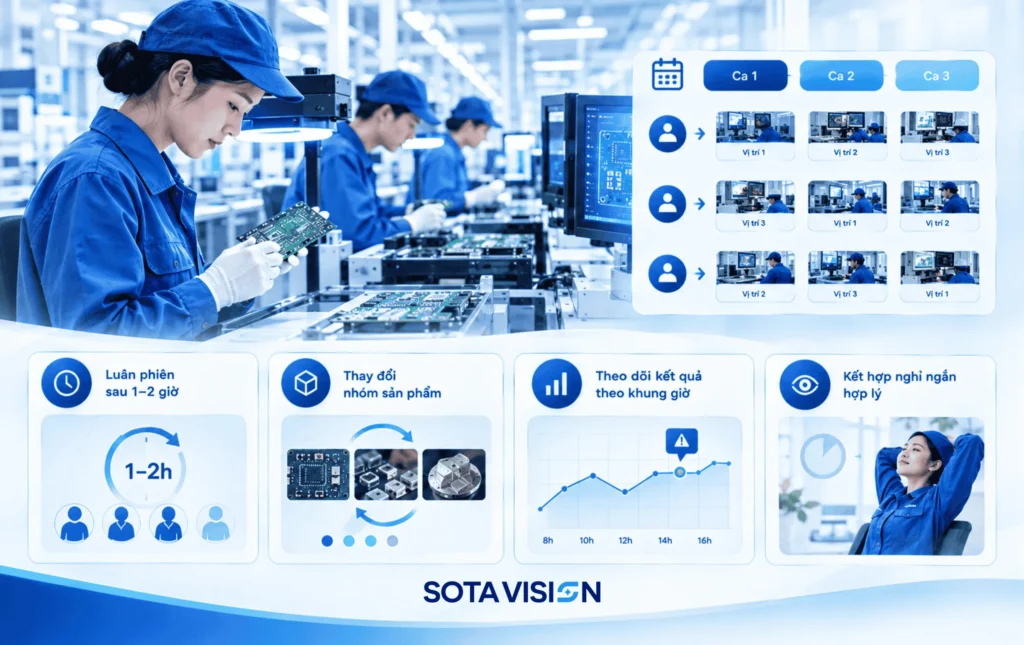
Tiêu chuẩn kiểm tra có thể được quy định chi tiết, nhưng kết quả của nhân công kiểm tra sản phẩm vẫn có thể khác nhau giữa từng người và từng ca. Kinh nghiệm, mức độ tập trung, thời gian làm việc và cách diễn giải tiêu chí lỗi đều có thể tạo ra biến thiên trong kết quả kiểm tra.
Một số yếu tố thường tạo ra sự khác biệt gồm:
- Khác biệt giữa kiểm tra viên: Người có nhiều kinh nghiệm có thể nhận diện một số lỗi nhanh hơn người mới.
- Khác biệt giữa các ca: Điều kiện làm việc, thời gian trong ca và mức độ mệt mỏi có thể ảnh hưởng đến khả năng duy trì sự tập trung.
- Khác biệt trong cách diễn giải tiêu chuẩn: Cùng một tiêu chí lỗi nhưng mỗi nhân công kiểm tra sản phẩm có thể đưa ra đánh giá khác nhau ở những trường hợp nằm gần ngưỡng đạt/không đạt.
- Biến động theo thời gian: Kết quả kiểm tra có thể thay đổi khi người kiểm tra phải quan sát số lượng lớn sản phẩm liên tục.
Lọt Lỗi Và Loại Nhầm Trong Kiểm Tra Chất Lượng
| Loại sai sót | Tên kỹ thuật | Định nghĩa | Hệ quả |
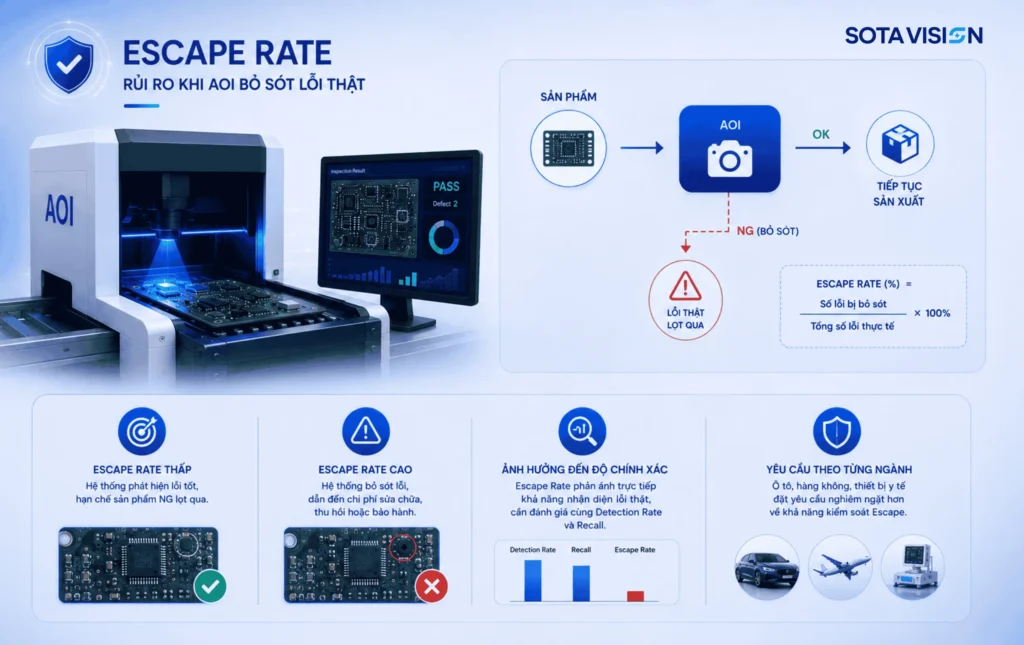
| Lọt lỗi | Escape rate | Tỷ lệ sản phẩm lỗi thật nhưng bị cho qua | Khiếu nại, bảo hành, thu hồi |
| Loại nhầm | False reject rate | Tỷ lệ sản phẩm tốt nhưng bị loại | Phế phẩm ảo, làm lại, giảm năng suất |
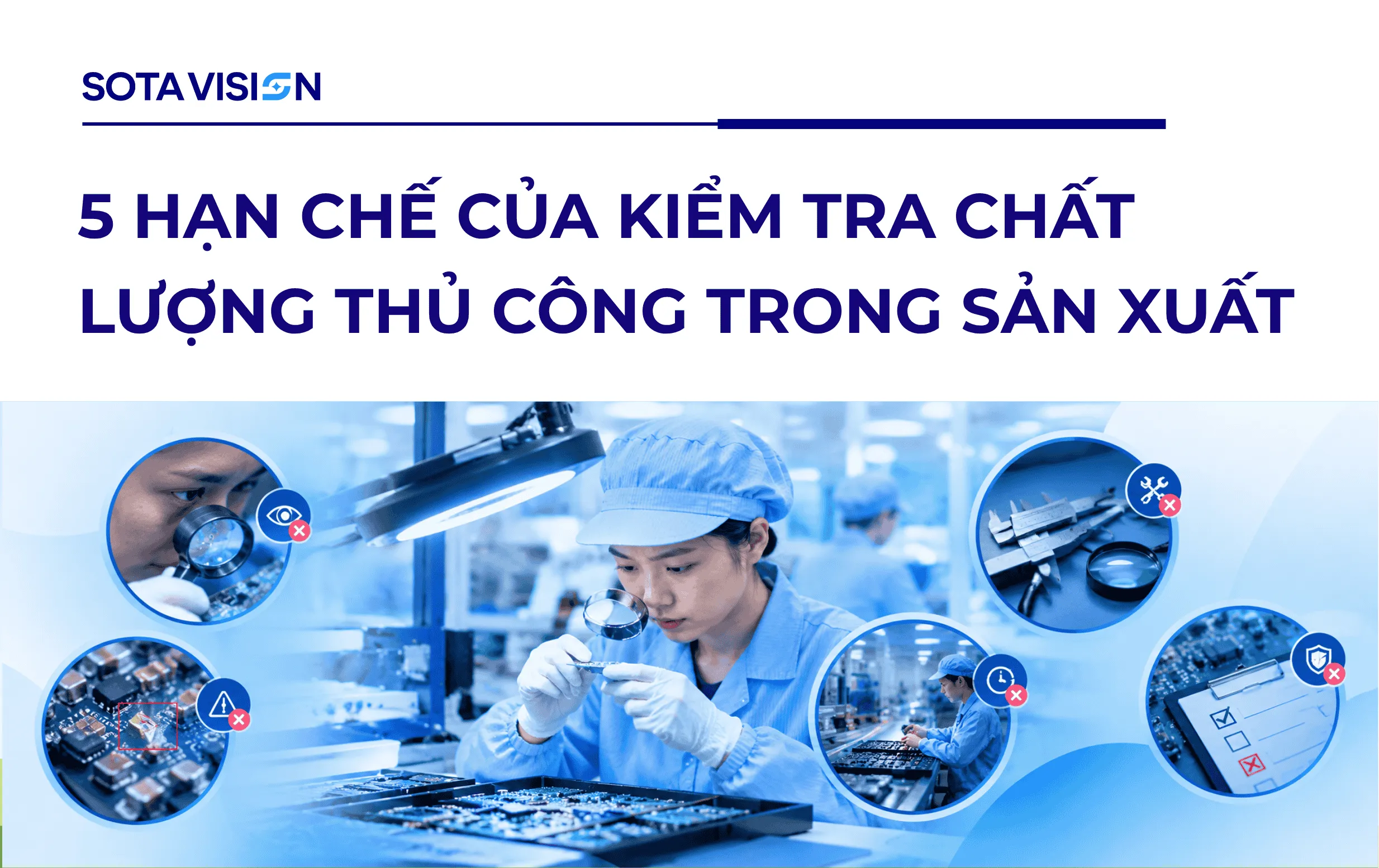
Xem thêm: 5 Hạn Chế Của Kiểm Tra Chất Lượng Thủ Công Trong Sản Xuất
Cách Tính Chi Phí Thực Của Nhân Công Kiểm Tra Sản Phẩm Trên Mỗi Đơn Vị Sản Phẩm
Nhiều nhà máy đã theo dõi tổng quỹ lương QC nhưng chưa tách riêng chi phí nhân công kiểm tra sản phẩm trên mỗi đơn vị sản phẩm. Để tính đúng chi phí nhân công kiểm tra sản phẩm, cần đưa vào cả tiền lương và các khoản chi phí liên quan như bảo hiểm, phụ cấp, đào tạo, làm thêm giờ và tuyển dụng.
Công Thức Tính Chi Phí Nhân Công Kiểm Tra Trên Mỗi Sản Phẩm
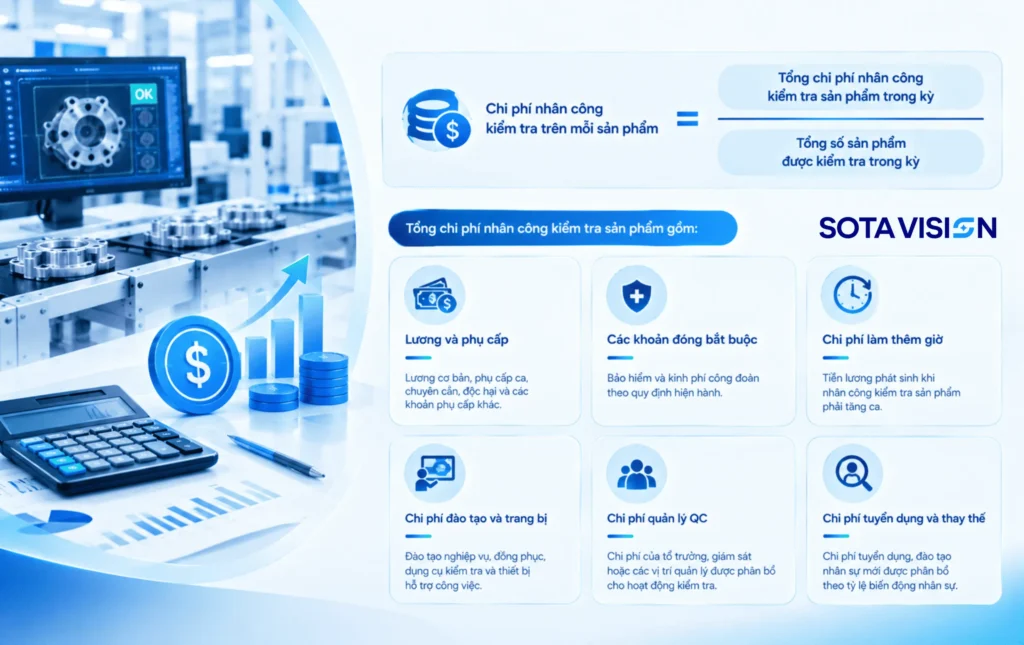
Để xác định chi phí nhân công kiểm tra sản phẩm trên từng đơn vị, doanh nghiệp có thể sử dụng công thức:
Chi phí nhân công kiểm tra trên mỗi sản phẩm = Tổng chi phí nhân công kiểm tra sản phẩm trong kỳ ÷ Tổng số sản phẩm được kiểm tra trong kỳ
Trong đó, tổng chi phí nhân công kiểm tra sản phẩm có thể bao gồm:
- Lương và phụ cấp: Lương cơ bản, phụ cấp ca, chuyên cần, độc hại và các khoản phụ cấp khác nếu có.
- Các khoản đóng bắt buộc: Phần doanh nghiệp đóng cho bảo hiểm và kinh phí công đoàn theo quy định hiện hành.
- Chi phí làm thêm giờ: Tiền lương phát sinh khi nhân công kiểm tra sản phẩm phải tăng ca để đáp ứng sản lượng.
- Chi phí đào tạo và trang bị: Đào tạo nghiệp vụ, đồng phục, dụng cụ kiểm tra và các thiết bị hỗ trợ công việc.
- Chi phí quản lý QC: Chi phí của tổ trưởng, giám sát hoặc các vị trí quản lý được phân bổ cho hoạt động kiểm tra.
- Chi phí tuyển dụng và thay thế: Chi phí tuyển dụng, đào tạo nhân sự mới được phân bổ theo tỷ lệ biến động nhân sự.
Tính Chi Phí Chất Lượng Liên Quan Đến Lỗi Kiểm Tra
COPQ có thể được phân thành hai nhóm chính:
- Chi phí thất bại nội bộ: Phế phẩm, sửa chữa, làm lại, kiểm tra lại và sản phẩm đạt chất lượng nhưng bị nhân công kiểm tra sản phẩm loại nhầm.
- Chi phí thất bại bên ngoài: Khiếu nại khách hàng, đổi trả, bảo hành, thu hồi sản phẩm và các chi phí liên quan đến mất khách hàng.
Ví Dụ Minh Họa Khi Sản Lượng Tăng Gấp Đôi
Nhằm thấy rõ tác động của sản lượng đến chi phí nhân công kiểm tra sản phẩm, có thể sử dụng một kịch bản giả định với cùng năng suất kiểm tra và thời gian vận hành. Các số liệu dưới đây chỉ nhằm minh họa cách tính, doanh nghiệp có thể thay thế bằng dữ liệu thực tế của từng dây chuyền.
Giả định chung:
- Mỗi nhân công kiểm tra sản phẩm xử lý 10 sản phẩm/phút.
- Dây chuyền hiện tại chạy 30 sản phẩm/phút.
- Nhà máy vận hành 1 ca, 8 giờ/ngày và 26 ngày/tháng.
- Mức lương giả định: 10 triệu đồng/người/tháng.
- Doanh nghiệp đóng thêm 21,5% bảo hiểm, đưa chi phí trực tiếp lên 12,15 triệu đồng/người/tháng.
- Chưa tính kinh phí công đoàn, phụ cấp ca, tăng ca và chi phí đào tạo.
- Sản lượng tháng hiện tại: 374.400 sản phẩm.
| Chỉ tiêu | Hiện trạng | A. Thêm người | B. Thêm ca | C. Tự động hóa |
| Sản lượng/tháng | 374.400 | 748.800 | 748.800 | 748.800 |
| Số nhân công kiểm tra sản phẩm | 3 | 6 | 6 | Khoảng 4 |
| Chi phí nhân công trực tiếp/tháng | 36,45 triệu | 72,9 triệu | 72,9 triệu | Khoảng 48,6 triệu |
| Chi phí nhân công/sản phẩm | ~97 đồng | ~97 đồng | ~97 đồng | ~65 đồng* |
| Số người/1 triệu sản phẩm | 8,0 | 8,0 | 8,0 | 5,3 |
| Rủi ro chính | Ổn định | Cần thêm trạm, diện tích và nhân sự | Phụ cấp ca đêm, mỏi mắt, chênh lệch giữa các ca | Chi phí đầu tư, chạy thử và hiệu chỉnh |
* Chưa bao gồm chi phí đầu tư hệ thống.
Mức giảm khoảng 30% trong kịch bản tự động hóa được lấy từ số liệu công bố của SotaVision trong một dự án cụ thể, không phải mức giảm cố định cho mọi nhà máy. Hiệu quả thực tế của nhân công kiểm tra sản phẩm sau tự động hóa sẽ phụ thuộc vào loại sản phẩm, đặc điểm lỗi, tốc độ dây chuyền và cấu hình hệ thống.
Hai điểm cần lưu ý khi phân tích chi phí nhân công kiểm tra sản phẩm:
- Mô hình thủ công có ít lợi thế quy mô: Khi năng suất của mỗi kiểm tra viên không thay đổi, sản lượng tăng kéo theo nhu cầu nhân sự tăng tương ứng. Vì vậy, chi phí nhân công trên mỗi sản phẩm gần như không thay đổi.
- Tự động hóa thay đổi cơ cấu chi phí: Một phần chi phí biến đổi liên quan đến nhân công kiểm tra sản phẩm được chuyển sang chi phí đầu tư hệ thống. Khi sản lượng tăng, chi phí cố định có thể được phân bổ trên nhiều sản phẩm hơn, tạo dư địa giảm chi phí kiểm tra trên mỗi đơn vị.
Các Phương Án Giảm Nhân Công Kiểm Tra Sản Phẩm Và Khả Năng Mở Rộng
Có nhiều cách giảm sự phụ thuộc vào nhân công kiểm tra sản phẩm, từ cải tiến phương pháp kiểm tra thủ công đến ứng dụng AOI và AI Vision. Mỗi phương án tạo ra tác động khác nhau đến chi phí, năng suất, độ ổn định và khả năng mở rộng.
Tối Ưu Quy Trình Và Lấy Mẫu Thống Kê
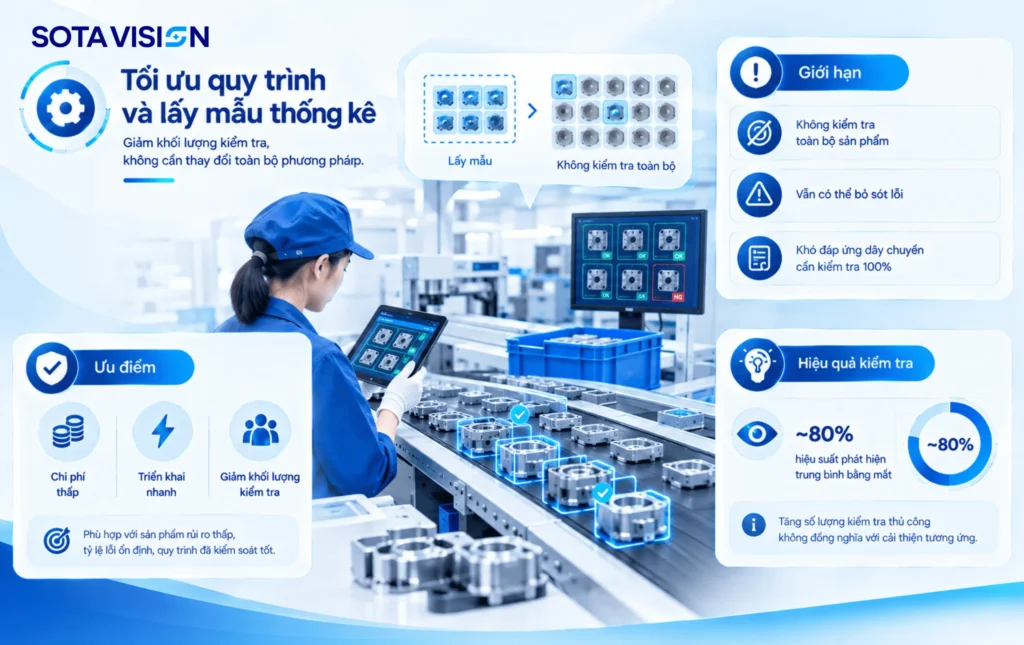
Tối ưu quy trình và lấy mẫu thống kê là phương án giúp giảm khối lượng công việc cho nhân công kiểm tra sản phẩm mà chưa cần thay đổi hoàn toàn phương pháp kiểm tra.
- Ưu điểm: Chi phí đầu tư thấp, triển khai nhanh và giúp giảm khối lượng kiểm tra cho nhân công kiểm tra sản phẩm. Phương án phù hợp với sản phẩm có mức độ rủi ro thấp, tỷ lệ lỗi ổn định hoặc quy trình sản xuất đã được kiểm soát tốt.
- Giới hạn: Lấy mẫu thống kê đồng nghĩa với việc không phải toàn bộ sản phẩm đều được kiểm tra. Một phần lỗi có thể nằm trong số sản phẩm không được kiểm tra. Vì vậy, phương án này khó đáp ứng các dây chuyền yêu cầu kiểm tra 100% hoặc cần truy xuất kết quả kiểm tra cho từng sản phẩm.
- Lưu ý về hiệu quả kiểm tra: Ngay cả khi tăng phạm vi kiểm tra thủ công, năng lực phát hiện lỗi của nhân công kiểm tra sản phẩm vẫn chịu giới hạn của thị giác và khả năng duy trì tập trung. Nghiên cứu của Judi See (2015) cho thấy hiệu suất phát hiện trung bình trong kiểm tra bằng mắt có thể ở mức khoảng 80%. Vì vậy, tăng số lượng sản phẩm được kiểm tra thủ công chưa chắc tạo ra mức cải thiện tương ứng về khả năng phát hiện lỗi.
Hỗ Trợ Kiểm Tra Thủ Công Bằng Ánh Sáng Chuẩn, Kính Phóng Đại Và Checklist Số
Chuẩn hóa điều kiện kiểm tra hỗ trợ nhân công kiểm tra sản phẩm quan sát lỗi rõ hơn và giảm áp lực trong quá trình làm việc. Tuy vậy, phương pháp vẫn phụ thuộc vào khả năng quan sát và mức độ tập trung của từng người. Khi sản lượng tăng mạnh, doanh nghiệp vẫn có thể phải bổ sung nhân công kiểm tra sản phẩm để đáp ứng khối lượng kiểm tra.
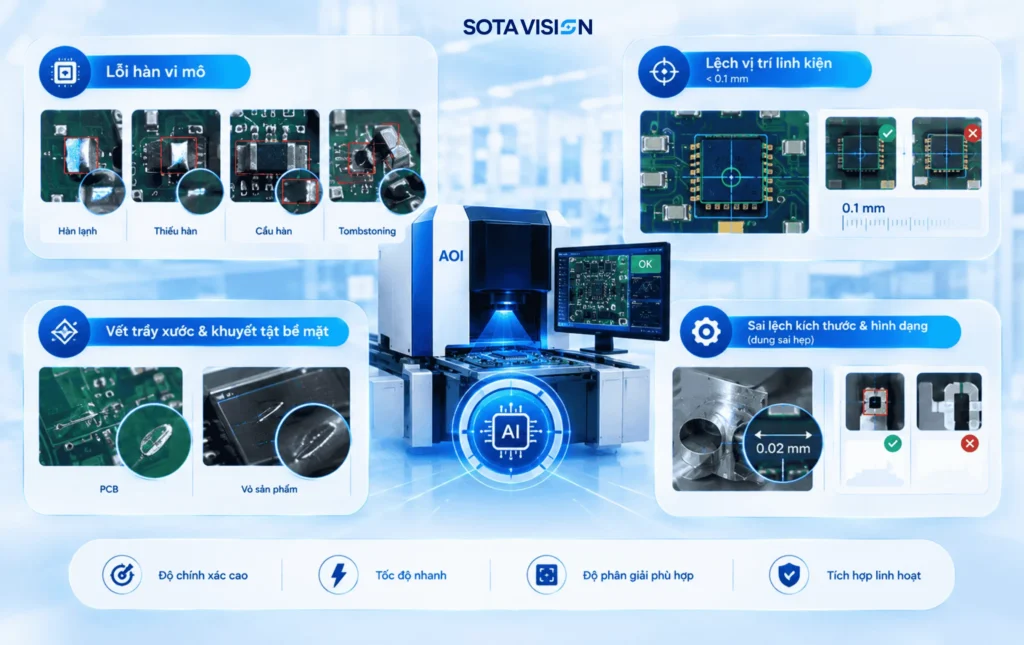
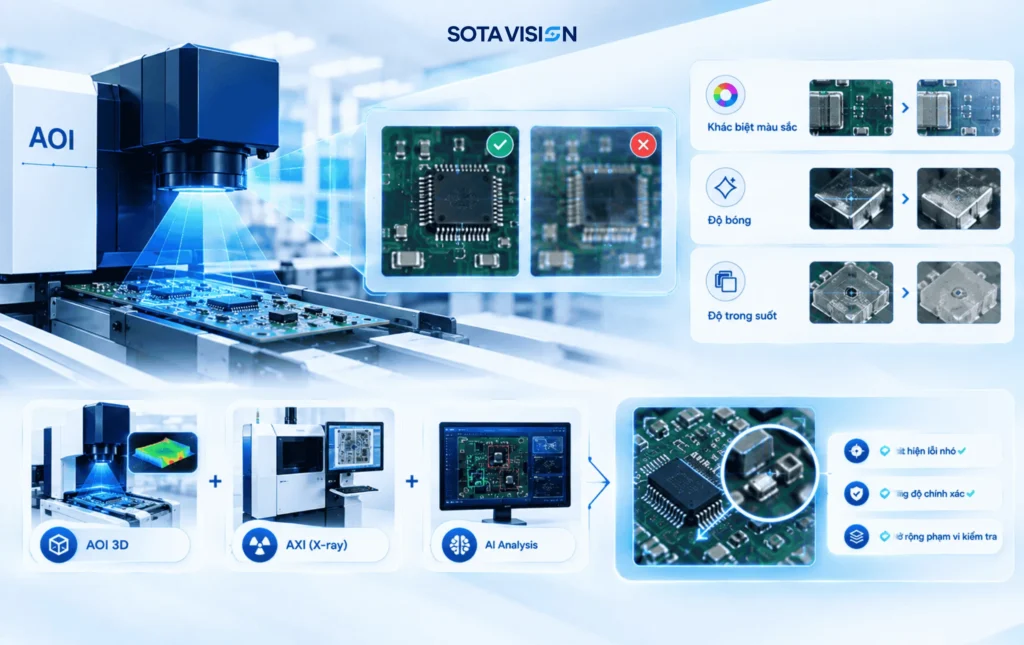
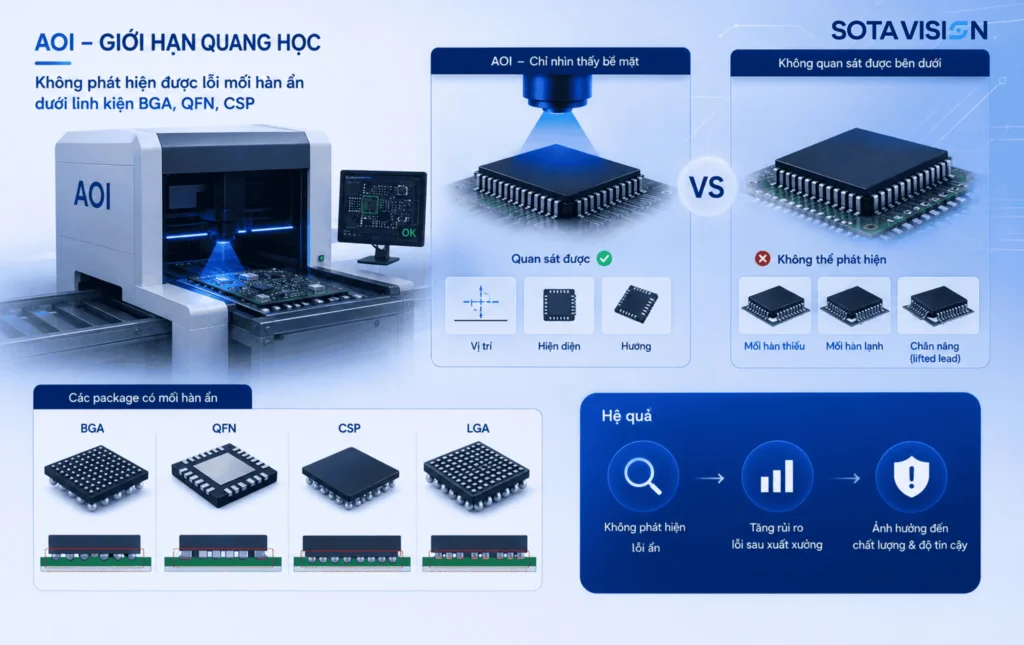
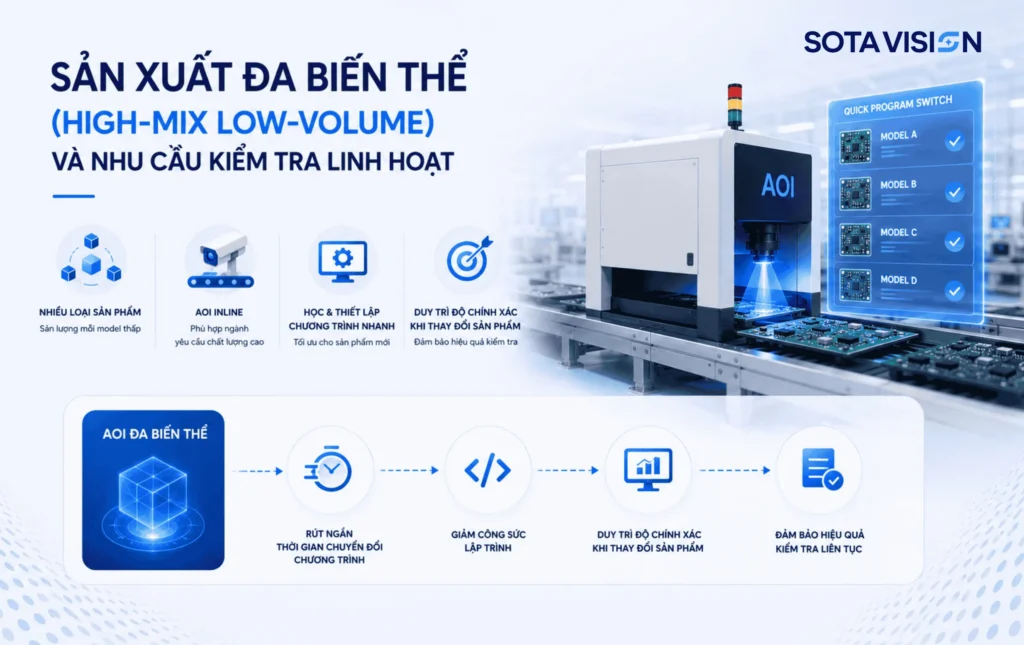
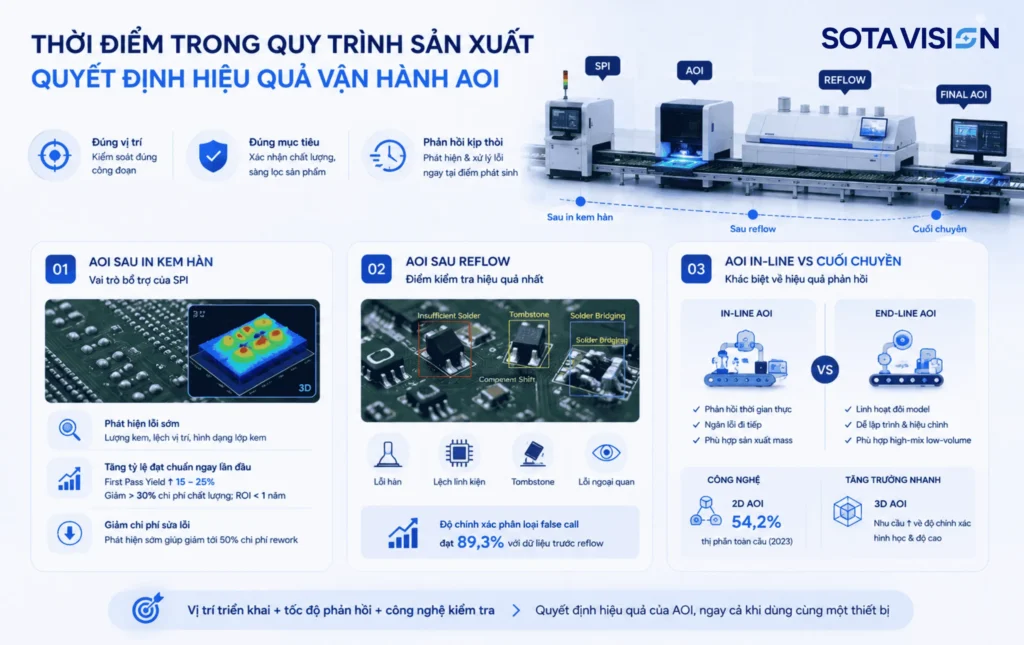
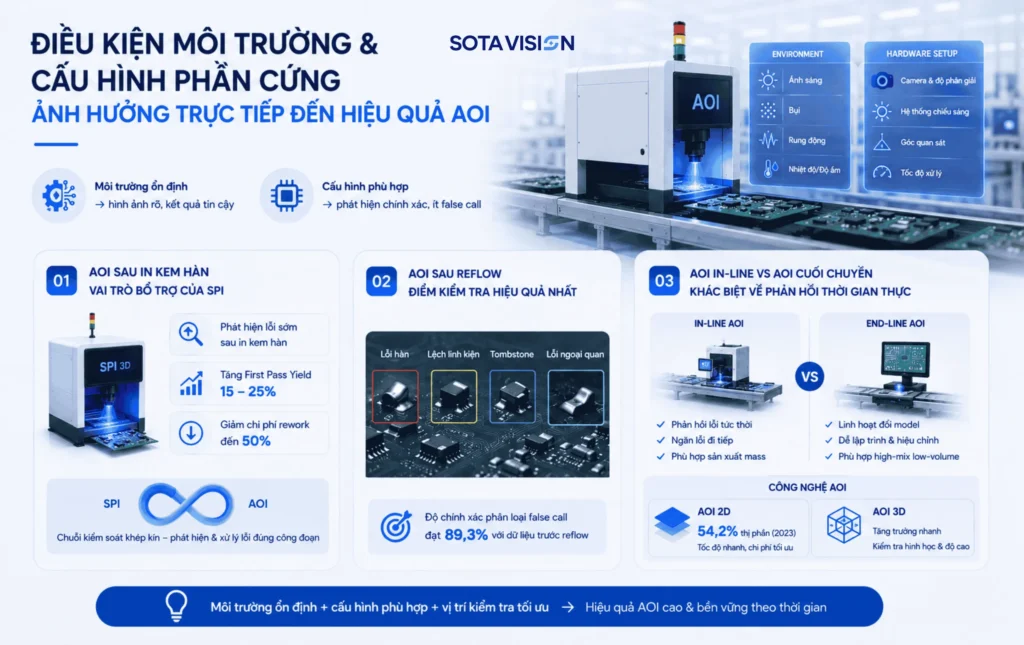
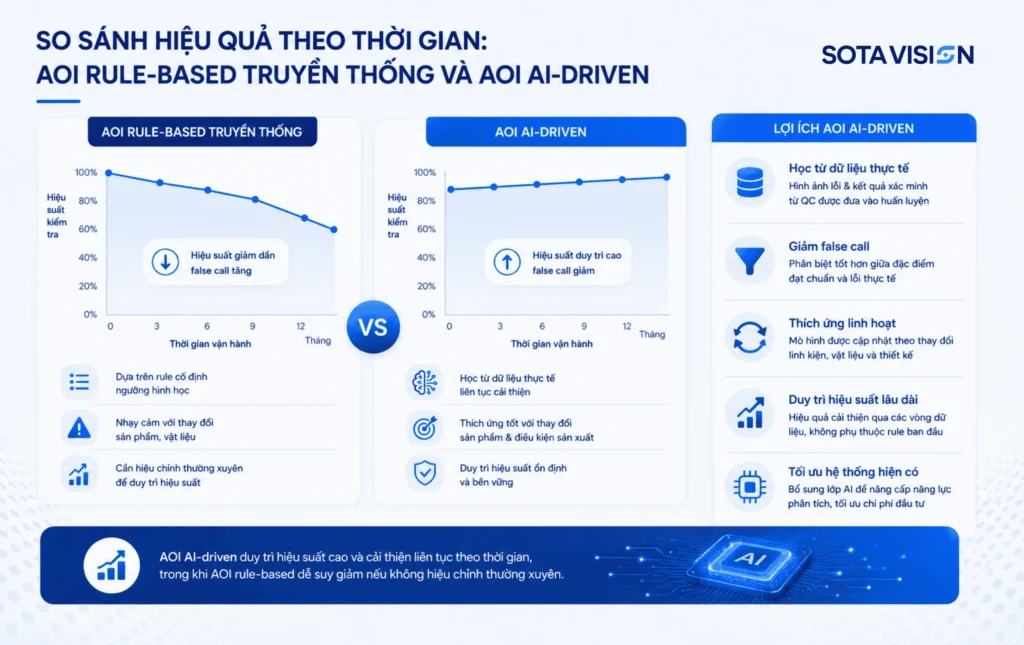
Máy Kiểm Tra Dựa Trên Luật (Rule-Based, Cảm Biến, AOI Truyền Thống
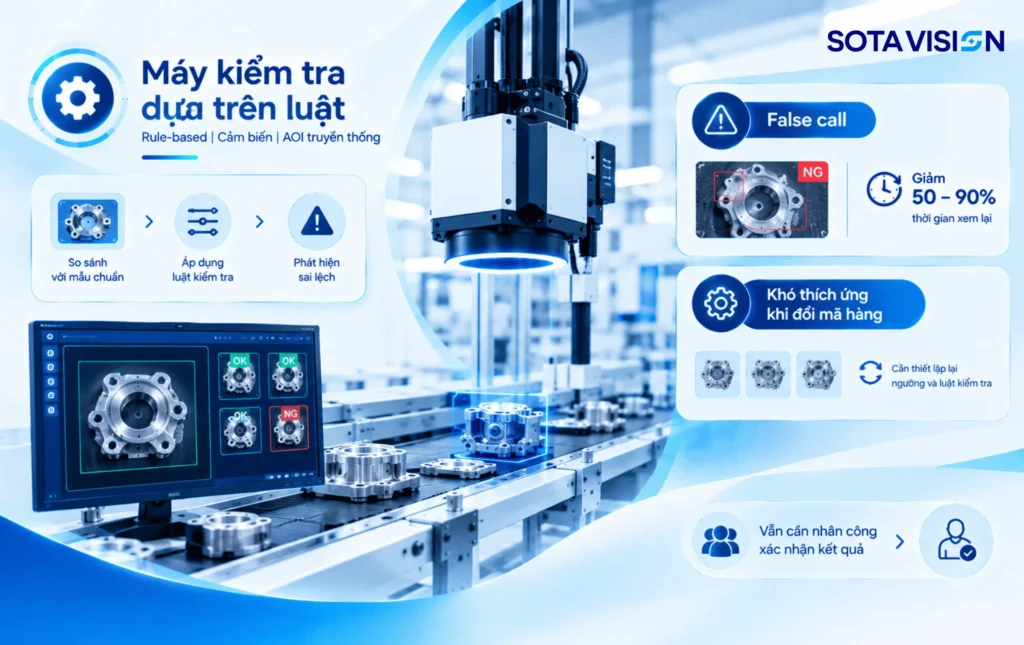
Máy kiểm tra dựa trên luật sử dụng các ngưỡng, mẫu chuẩn hoặc điều kiện được thiết lập trước để phát hiện sai lệch. Hệ thống xử lý hình ảnh nhanh và tạo kết quả nhất quán hơn trong các điều kiện đã được cấu hình.
Phương án giảm nhân công kiểm tra sản phẩm này có thể giảm một phần khối lượng công việc cho nhân công kiểm tra sản phẩm, nhưng vẫn tồn tại hai giới hạn chính:
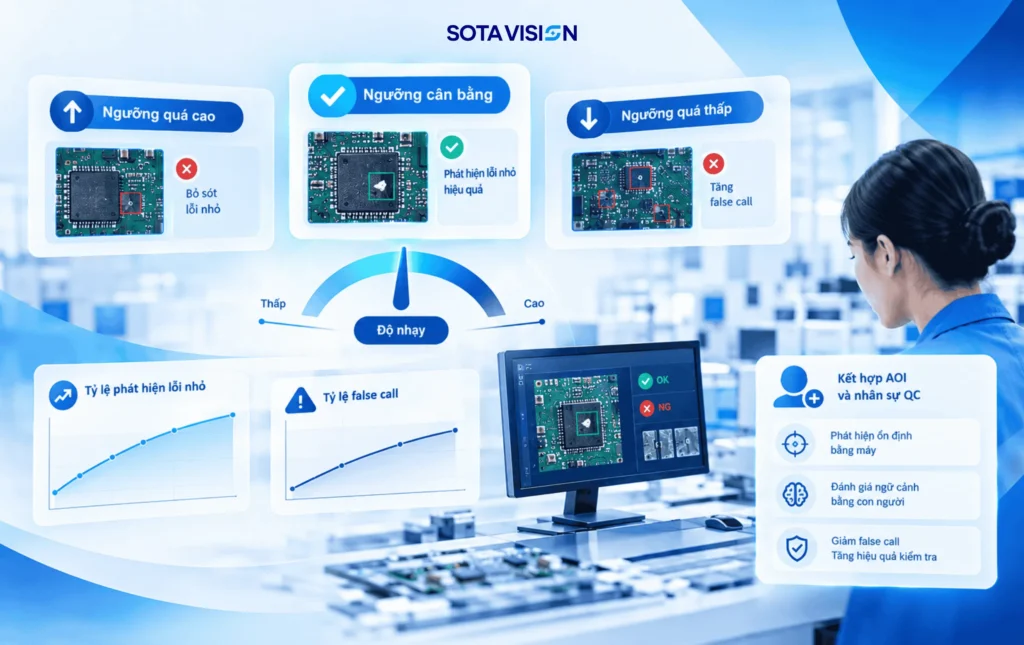
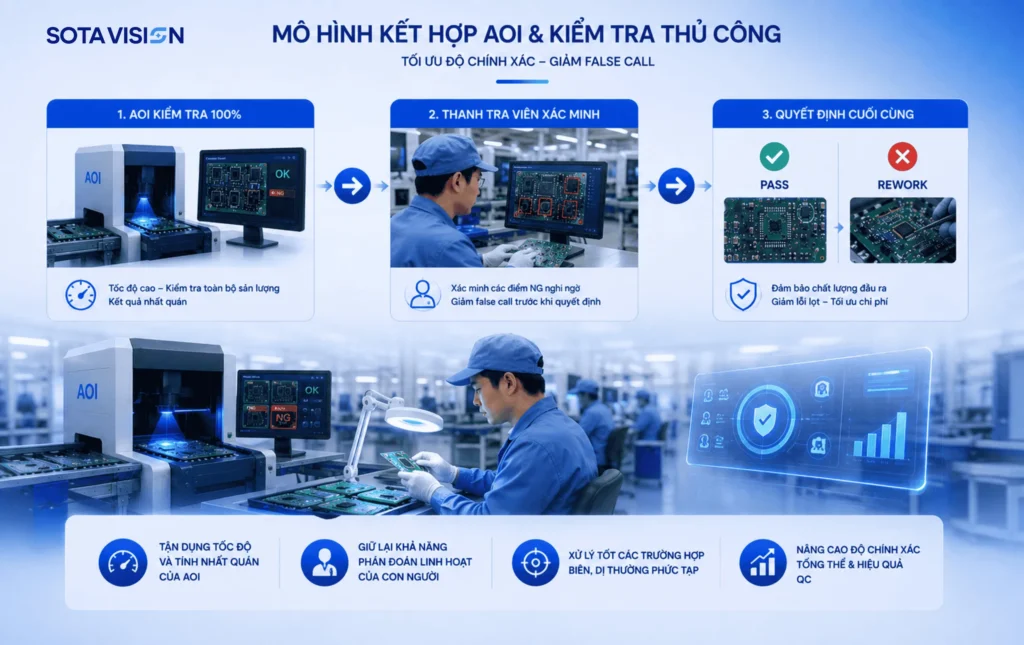
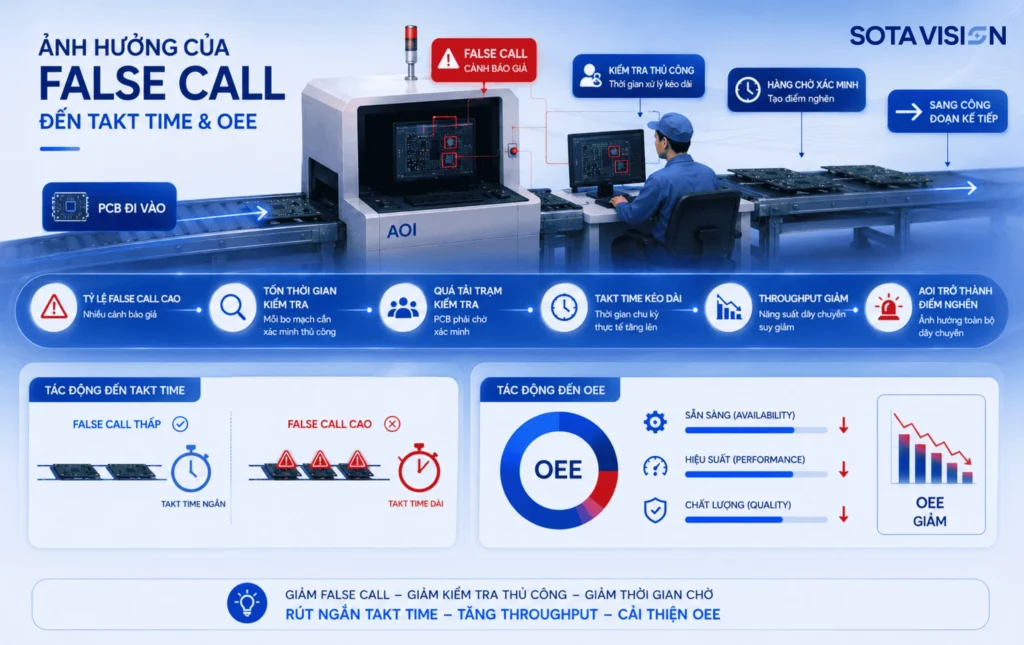
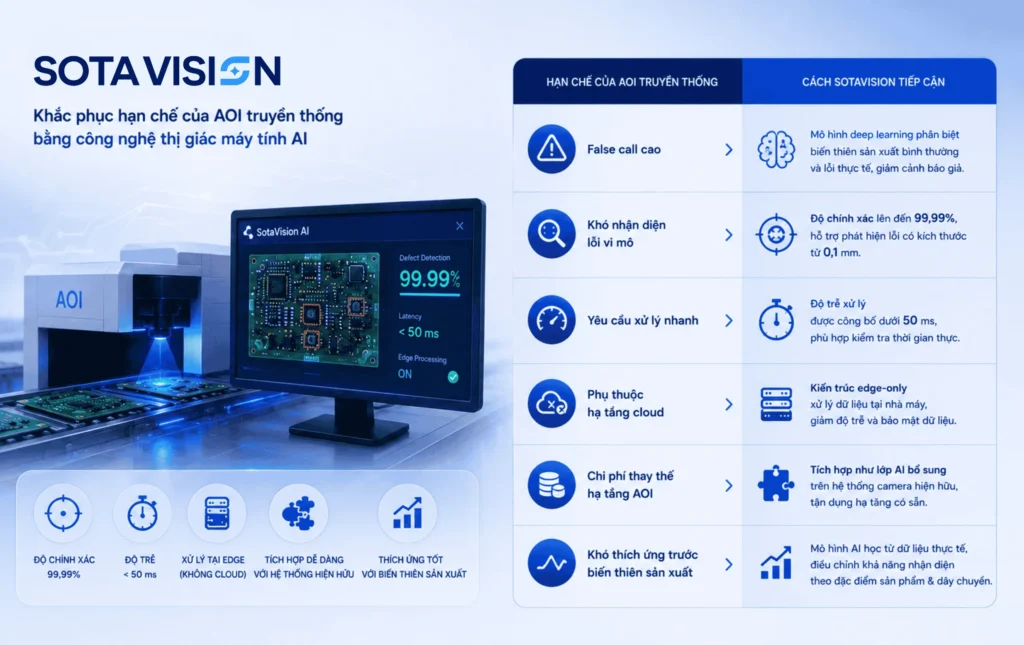
- False call: Biến thiên bình thường của vật liệu, ánh sáng hoặc nhà cung cấp có thể bị hệ thống đánh dấu là lỗi. Nhân công kiểm tra sản phẩm vẫn phải xem lại các cảnh báo để xác định lỗi thật hay cảnh báo sai. Mycronic cho biết hệ thống học sâu của họ có thể giúp giảm 50% đến 90% thời gian dành cho việc xem lại false call.
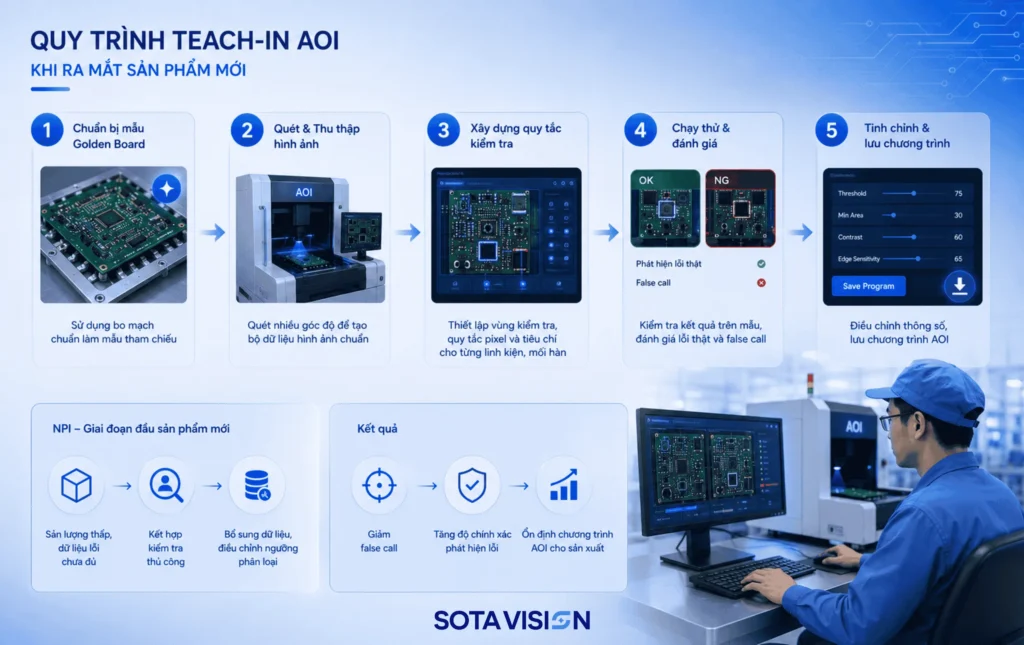
- Khó thích ứng khi đổi mã hàng: Mỗi sản phẩm hoặc biến thể mới có thể yêu cầu thiết lập lại ngưỡng và luật kiểm tra, làm tăng công việc cấu hình và có thể khiến nhân công kiểm tra sản phẩm tiếp tục tham gia nhiều ở giai đoạn xác nhận kết quả.
Kiểm Tra Bằng AI Thị Giác Máy Tính
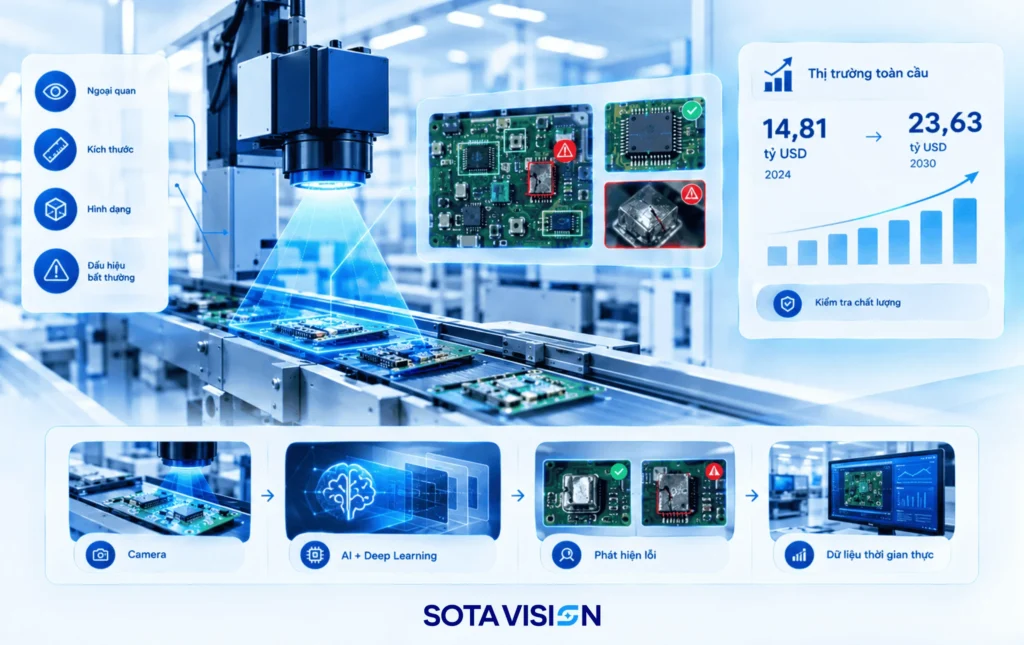
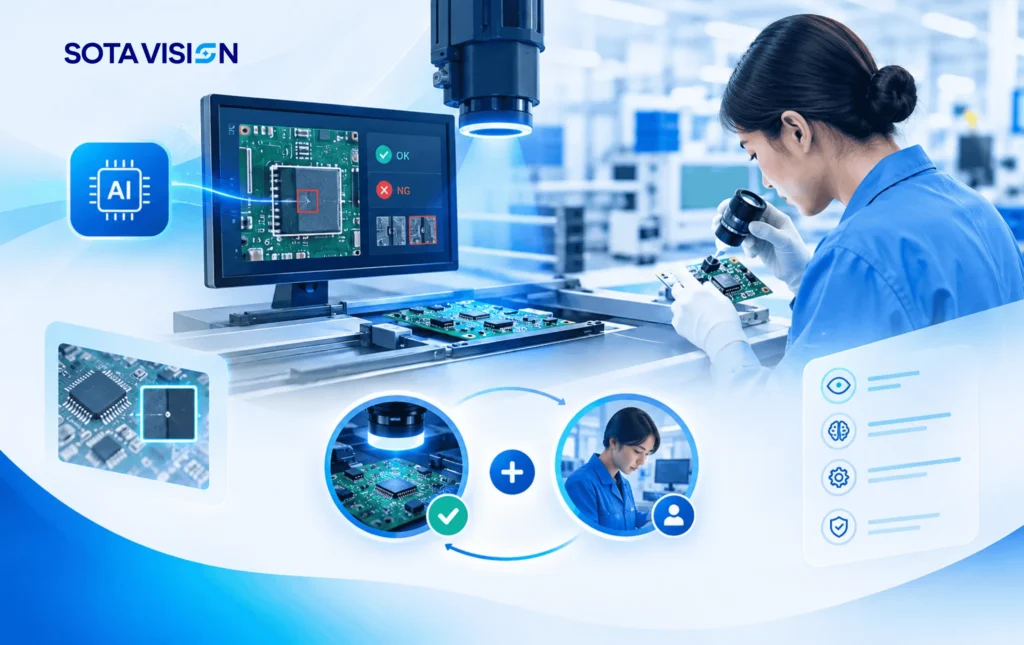
AI thị giác máy tính sử dụng dữ liệu hình ảnh để học đặc trưng của sản phẩm đạt và các dạng lỗi cần phát hiện. Về vận hành, AI Vision có thể hỗ trợ nhân công kiểm tra sản phẩm theo mô hình:
- Camera thu nhận hình ảnh sản phẩm liên tục.
- AI phân tích hình ảnh và nhận diện đặc trưng lỗi.
- Hệ thống phân loại kết quả OK/NG theo tiêu chí đã được huấn luyện.
- Nhân sự QC tập trung vào xác nhận lỗi, xử lý trường hợp bất thường và kiểm soát chất lượng.
- Dữ liệu nhân công kiểm tra sản phẩm được lưu lại phục vụ truy xuất và theo dõi chất lượng.
Bảng So Sánh 4 Hướng Theo Chi Phí Đầu Tư, Khả Năng Mở Rộng, Độ Ổn Định, Mức Giảm Nhân Lực
Đánh giá mang tính tham khảo. Hiệu quả thực tế phụ thuộc vào sản phẩm, tốc độ dây chuyền, tiêu chuẩn chất lượng và mức độ tự động hóa.
| Tiêu chí | Tối ưu quy trình và lấy mẫu | Hỗ trợ kiểm tra thủ công | Máy dựa trên luật/AOI | AI thị giác máy tính |
| Chi phí đầu tư | Thấp | Thấp | Trung bình đến cao | Trung bình đến cao |
| Khả năng mở rộng | Hạn chế | Hạn chế | Tốt nếu sản phẩm ổn định | Tốt |
| Độ ổn định | Phụ thuộc nhân sự | Phụ thuộc nhân sự | Cao trong điều kiện ổn định | Cao, cần theo dõi mô hình |
| Mức giảm nhân công kiểm tra sản phẩm | Thấp | Thấp | Trung bình | Trung bình đến cao |
| Yêu cầu nhân sự | Vẫn cần nhân công kiểm tra sản phẩm | Vẫn phụ thuộc nhân công kiểm tra sản phẩm | Cần người xử lý cảnh báo | Nhân sự tập trung vào QC và xử lý ngoại lệ |
| Phù hợp | Lỗi ít nghiêm trọng, quy trình ổn định | Cần cải thiện nhanh điều kiện kiểm tra | Sản phẩm ít biến thể | Sản lượng cao, nhiều dạng lỗi, cần kiểm tra 100% |
SotaVision: Giải Pháp Kiểm Tra Ngoại Quan Bằng AI Giúp Giảm Nhân Công Kiểm Tra Sản Phẩm Khi Tăng Sản Lượng
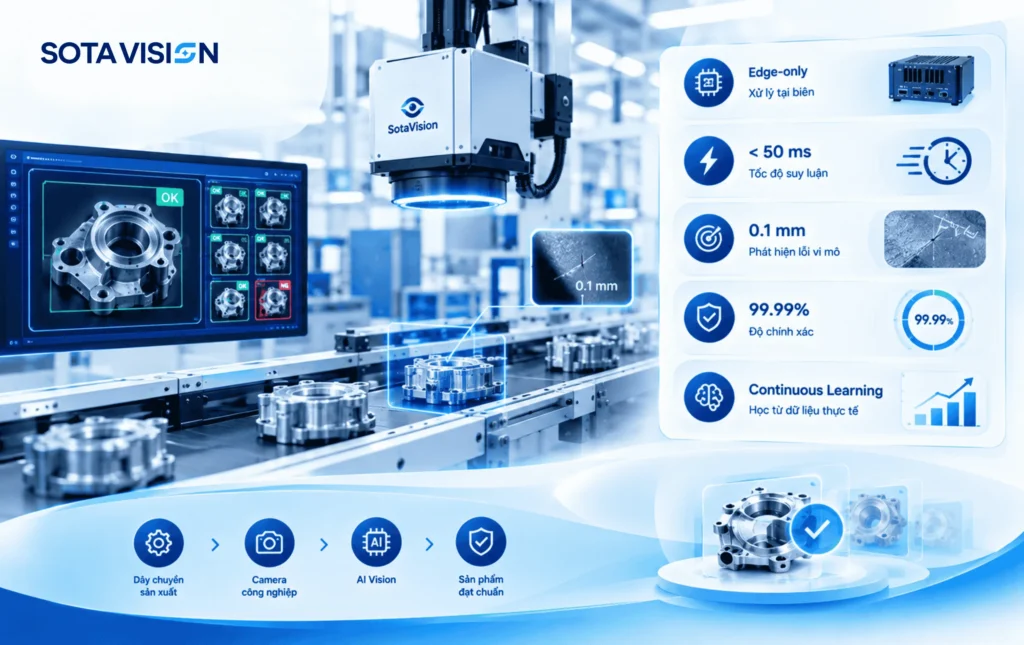
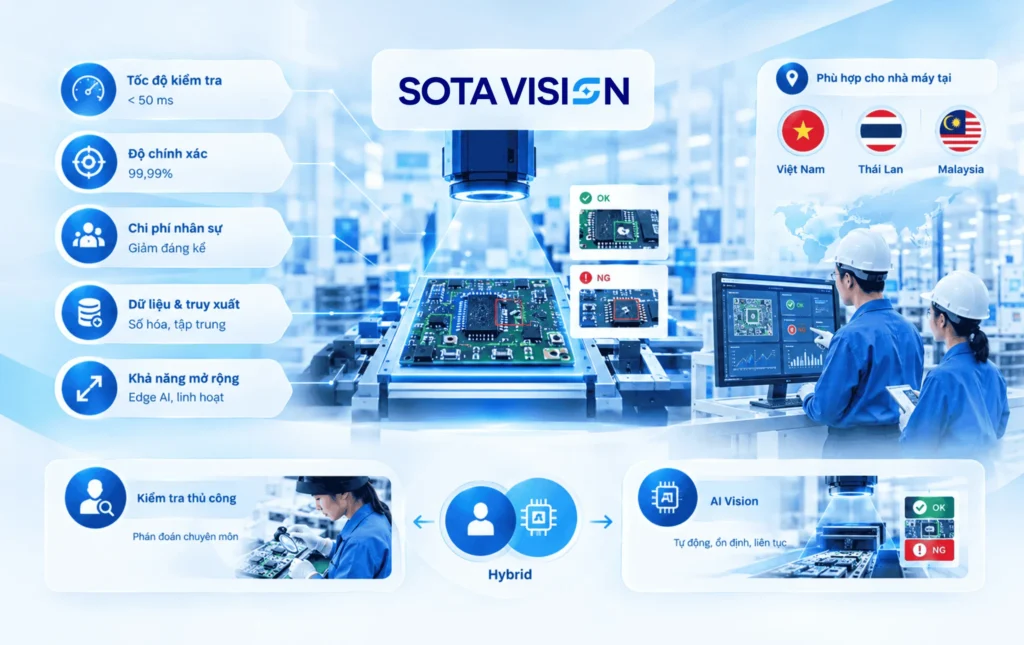
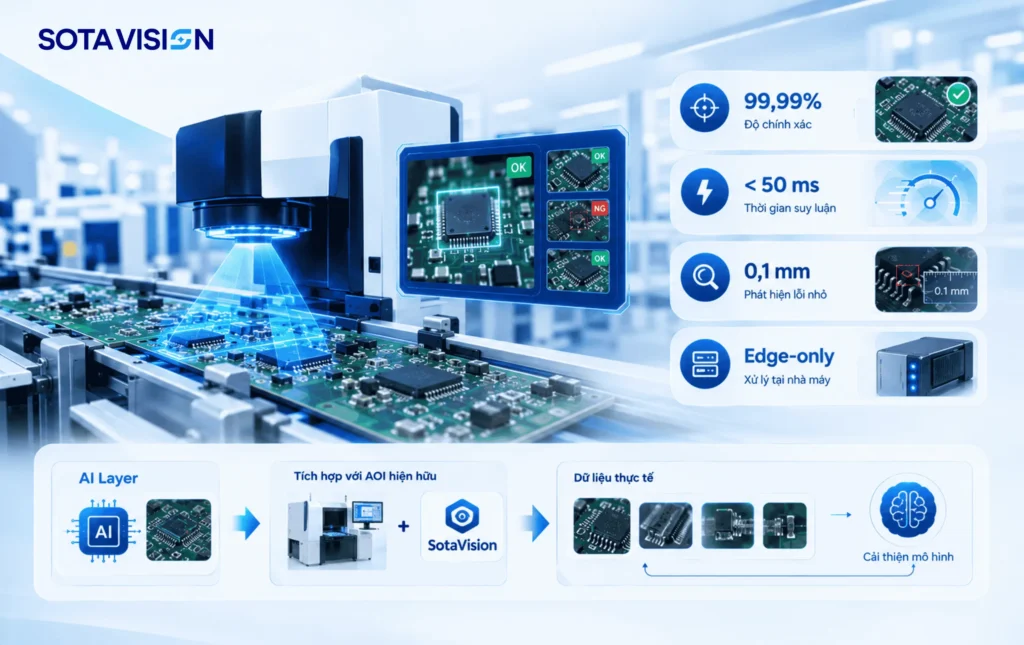
SotaVision giải quyết bài toán giảm nhân công kiểm tra sản phẩm bằng AI Vision, tự động hóa các công đoạn kiểm tra ngoại quan có tính lặp lại. Hệ thống kết hợp camera công nghiệp, ánh sáng phù hợp và mô hình AI để phân tích hình ảnh sản phẩm theo thời gian thực, phát hiện lỗi và phân loại kết quả OK/NG.
Quy trình kiểm tra có thể được vận hành theo hướng:
- Camera thu nhận hình ảnh sản phẩm liên tục trên dây chuyền.
- AI phân tích hình ảnh và nhận diện các đặc trưng lỗi đã được huấn luyện.
- Hệ thống phân loại sản phẩm OK/NG theo tiêu chí chất lượng.
- Dữ liệu kiểm tra được ghi nhận phục vụ truy xuất và phân tích.
- Nhân công kiểm tra sản phẩm tập trung vào các trường hợp bất thường, xác nhận lỗi và xử lý các tình huống cần phán đoán chuyên môn.
Mô hình trên giúp doanh nghiệp tăng năng lực kiểm tra mà không cần tăng nhân công kiểm tra sản phẩm theo cùng tỷ lệ tăng sản lượng. Đặc biệt, các dây chuyền yêu cầu kiểm tra 100% có thể giảm đáng kể khối lượng quan sát thủ công. Thay vì bổ sung thêm nhân công kiểm tra sản phẩm mỗi khi tốc độ dây chuyền tăng, AI có thể xử lý phần công việc kiểm tra hình ảnh lặp lại liên tục.
Xem thêm: SotaVision
Kết Luận
Doanh nghiệp có thể bắt đầu giảm nhân công kiểm tra sản phẩm bằng cách tối ưu quy trình, áp dụng lấy mẫu thống kê, chuẩn hóa điều kiện kiểm tra hoặc sử dụng AOI. Tuy nhiên, các phương án giảm nhân công kiểm tra sản phẩm trên vẫn có giới hạn về phạm vi kiểm tra, khả năng thích ứng và mức độ phụ thuộc vào nhân sự. AI Vision mở ra hướng tự động hóa sâu hơn, đặc biệt phù hợp với dây chuyền có sản lượng cao, yêu cầu kiểm tra 100% hoặc cần duy trì kết quả kiểm tra ổn định giữa các ca.
SotaVision giúp tự động hóa kiểm tra ngoại quan bằng AI, hỗ trợ phát hiện lỗi, phân loại OK/NG và ghi nhận dữ liệu kiểm tra theo thời gian thực. Nhân sự QC có thể giảm khối lượng công việc lặp lại, tập trung vào xử lý ngoại lệ và các hoạt động kiểm soát chất lượng có giá trị cao hơn. Qua đó, doanh nghiệp có thể giảm sự phụ thuộc vào nhân công kiểm tra sản phẩm mà vẫn duy trì khả năng kiểm tra khi sản lượng tiếp tục mở rộng.
Liên hệ với chúng tôi để đánh giá bài toán kiểm tra ngoại quan và xác định giải pháp giảm nhân công kiểm tra sản phẩm phù hợp với dây chuyền của doanh nghiệp.